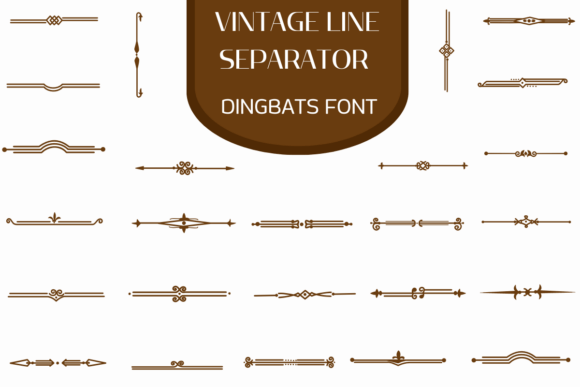
Vintage Line Separator: A Classic Touch for Modern Design
In the world of graphic design, sometimes the smallest detail creates the most significant impact. A well-chosen vintage line separator is a fun and useful dingbats font. Add it to your creative ideas and enjoy the results! This classic design asset offers an effortless way to inject personality, structure, and a sense of timeless elegance into your visual projects. It’s more than just a decorative border; it’s a tool for enhancing visual hierarchy and brand storytelling.
What is a Vintage Line Separator?
A vintage line separator is a typographic element or dingbat character that functions as a decorative divider. Typically featuring ornate flourishes, geometric Art Deco patterns, or delicate scrollwork, it evokes the craftsmanship of historical print design. While rooted in the past, its application in modern graphic design is incredibly versatile. It helps break up text, guide the viewer's eye, and add a layer of sophistication to layouts.
In an era of minimalist design, incorporating such an element provides a strategic contrast. It can soften a stark web design interface, add warmth to social media graphics, or lend authority to editorial design. The key is using it with intention, ensuring it complements rather than overwhelms your core message.
Practical Applications for Creative Projects
Integrating a vintage line separator into your design workflow can elevate numerous applications. Its versatility makes it a valuable asset for designers, marketers, and creators aiming for a polished, professional presentation.
- Branding and Logo Design: Use a subtle separator to frame a brand name within a logo or on business cards, reinforcing a classic or artisan brand identity.
- Marketing Materials: Enhance flyers, brochures, and email headers by dividing sections elegantly, improving readability and visual hierarchy.
- Social Media Content: Create standout Instagram Stories, Pinterest pins, or LinkedIn banners that capture attention with a touch of vintage charm.
- Website and UI Design: Implement separators between content sections in web design or as decorative elements in a UI design to improve user experience through clear visual cues.
- Editorial and Packaging Design: Add flair to magazine layouts, book chapters, or product packaging to communicate quality and attention to detail.
Tips for Effective Integration
To maximize the impact of a vintage line separator, consider these practical guidelines:
- Maintain Consistency: Choose a separator style that aligns with your existing color palette, typography, and overall brand aesthetic. Consistency builds recognition.
- Prioritize Readability: Ensure the separator does not compete with or obscure your primary content. Its role is to support, not dominate.
- Test Scalability: Verify that the design remains crisp and effective across different sizes, from a tiny favicon to a large-format print.
- Consider Your Audience: A vintage aesthetic might resonate perfectly with certain design trends or target demographics but may feel out of place for a ultra-modern tech brand.
When selecting any creative asset, evaluate its file format, licensing, and compatibility with your software. A high-quality separator should be easy to customize in terms of color and size to fit seamlessly into your design projects.
Ultimately, thoughtful design is about making intentional choices that serve both form and function. Incorporating elements like a vintage line separator is a testament to a designer's attention to detail and understanding of visual communication. By curating high-quality assets and applying them with purpose, you can transform standard layouts into memorable experiences, strengthening your brand's narrative and connecting with your audience on a deeper level.